
TTArtisan 50mm f/0.95
TTArtisan · 50 mm · f/0.95
Score Breakdown
Scores combine our editorial testing with published lab data.
General | |
|---|---|
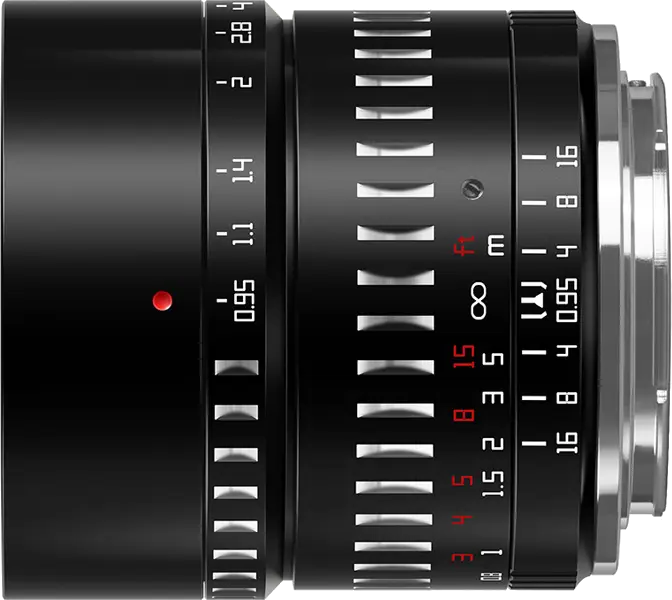
About This LensThis 2022 TTArtisan prime pairs a 50mm focal length with an f/0.95 maximum aperture. It comes in versions for Canon RF, Fujifilm X, Leica L, Micro Four Thirds, Nikon Z and Sony E. All six share the same optical design. Pick the version made for your camera, because each one fits only its own mount. The Canon RF version covers APS-C. Other versions list different sensor formats, so check the details for yours. That speed suits portraits, street work and dim interiors. Focusing is manual only, and the lens has no stabilization or weather sealing. You give up those automated helpers for a very wide aperture, so it rewards patient, deliberate shooting. | |
| Brand | TTArtisan |
| Release Year | 2022 |
Lens Mount ⓘThe lens mount will tell you what type of lens range you can fit onto the camera body. Often the same camera company will have different lens ranges for different cameras. | Leica L |
System ⓘIndicates which camera system the lens is designed to attach to. | Leica L |
Maximum Format ⓘLargest sensor size compatible with the lens. |  APS-C APS-C |
Physical57/100 | |
About the BuildThe lens weighs 14.5 oz (411 g), light enough for long handheld sessions. The Canon RF version measures 2.36 in (60 mm) wide and 2.44 in (62 mm) long, so it stays small on a mirrorless body. Filters screw directly into the 58mm thread, so a polariser or ND filter needs no adapter. | |
| Lens Weight | 411 g |
Front Filter Compatible ⓘSome lenses are compatible with front filters, some are compatible with back filters and some are compatible with both. Front filters are usually more convenient to add and remove. |  Yes Yes |
Front Filter Size ⓘDiameter of attachable filters. | 58 mm |
Optics76/100 | |
About the OpticsOn the APS-C versions, the 50mm focal length frames like a short telephoto. That view flatters portraits and tightens street scenes. Subjects fill the frame from a comfortable working distance. The f/0.95 maximum aperture is the lens's main draw. It captures candlelit rooms, night streets and dim venues without pushing ISO settings high. You can also keep shutter speeds reasonable where flash is unwelcome. At portrait distance the aperture throws backgrounds out of focus, isolating a face against busy surroundings. That shallow focus is demanding. Wide open, only a sliver of a face stays sharp, so turn the manual ring slowly and confirm focus with peaking or magnified view. Stop down a little and depth of field relaxes, so focusing becomes much easier. Ten aperture blades help keep the opening round when you stop down, smoothing out-of-focus highlights. That roundness shows most in evening lights and foliage behind a subject. Closest focus is 1.6 ft (50 cm), enough for head-and-shoulder portraits. Our optics specification score for the lens is 76 out of 100. | |
Focal Range ⓘShortest to longest focal length of the lens (zoom range start - end ) | 50 mm |
Aperture Range ⓘLargest aperture at the lens's shortest focal length to longest focal length (aperture range start - end) | 0.95 |
| Focal Length Angle of View | 32° |
Flange Focal Distance ⓘDistance from lens mount to sensor. | 20 mm |
Diaphragm Type ⓘStructure and design of the aperture |  Manual Manual |
Blades ⓘNumber of diaphragm blades in aperture | 10020 |
Zoom Lens ⓘZoom allows you to vary the focal length, change between long shots and close-ups | No |
Closest Focusing Distance ⓘMinimum distance for a subject to be in focus. | 50 cm01500 |
| Autofocus Mode | No |
| Manual Mode |  Yes Yes |
| Manual Focusing Ring |  Yes Yes |
Features | |
About the FeaturesThe feature list is short. There is no image stabilization, so at slower shutter speeds camera shake is entirely your responsibility. The wide aperture helps in dim light, but stopped down or in deep shade, brace yourself or use a tripod. There is no weather sealing either. Rain, spray and grit have a direct path inside, so keep the lens covered or bagged in rough conditions. The front glass also has no fluorine coating. Smudges and fingerprints need careful wiping rather than a quick brush-off, so carry a clean cloth. Brush off dust first, then wipe gently. | |
Weather Sealing ⓘWeather sealing capabilities will give you more confidence when shooting in unfavourable conditions. | No |
Fluorine Coating ⓘCoating to repel water and oil from lens elements. | No |
| Built In Lens Hood | No |
Teleconverter ⓘA teleconverter (extender) is an extra piece of equipment that fits between the lens and the camera body to enhance magnification | No |
| Image Stabilization | No |
Construction | |
About the ConstructionEight elements in six groups make up the optical path. The Canon RF version contains no aspherical or low-dispersion elements, so the design uses conventional glass throughout. That keeps the construction straightforward. All focusing work passes through the manual ring rather than a motor. | |
Elements ⓘLens elements refer to individual pieces of glass within the lens. | 8 |
| Groups | 6 |
Aspherical Elements ⓘThe number of aspherical lens elements which can help correct aberrations such as spherical aberration. | 0 |
Bi Aspherical Elements ⓘElements with two non-spherical surfaces | 0 |
Super Low Dispersion ⓘAdvanced elements further reducing chromatic aberration | 0 |
CA Reduction ⓘBuilt-in features to reduce chromatic aberration | 0 |
Internal Focusing ⓘInternal Focusing means that the lens does not change in size during focusing, and the front element does not rotate. | No |