
TTArtisan AF 35mm f/1.8 II
TTArtisan · 35 mm · f/1.8
Score Breakdown
Scores combine our editorial testing with published lab data.
General | |
|---|---|
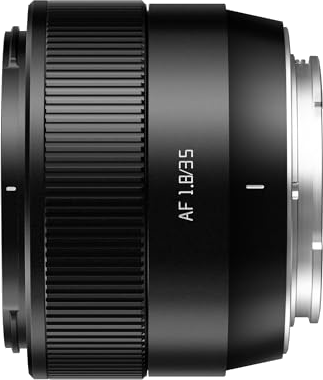
About This LensThis second-generation TTArtisan prime puts a 35mm lens on APS-C mirrorless cameras. It comes in Sony E, Fujifilm X and Nikon Z versions, so choose the one matching your system. The design launched in 2024 and remains in production. The 35mm focal length gives a natural, walk-around view for street, travel and everyday pictures. The f/1.8 aperture and light build suit dim interiors and evening streets. As a prime it serves one focal length, so you frame by moving yourself. That fixed view is the main trade-off for the bright aperture and small size. | |
| Brand | TTArtisan |
| Release Year | 2024 |
Production Status ⓘCurrent status of lens manufacturing (e.g., in production, discontinued). |  In Production In Production |
Version ⓘThe iteration or release number of a particular lens model. | II |
Lens Mount ⓘThe lens mount will tell you what type of lens range you can fit onto the camera body. Often the same camera company will have different lens ranges for different cameras. | Fujifilm X |
System ⓘIndicates which camera system the lens is designed to attach to. | Fujifilm X |
Maximum Format ⓘLargest sensor size compatible with the lens. |  APS-C APS-C |
Physical57/100 | |
About the BuildIt weighs 6.2 oz (176 g) and runs 1.93 in (49 mm) long, so it stays small on an APS-C body. That lightness makes the camera easy to raise one-handed for quick candids. A 52mm screw-in filter attaches directly to the front thread. Our Physical score is 57/100. | |
| Lens Weight | 176 g |
Lens Length ⓘHow long the lens is from front to back. | 49 mm |
Front Filter Compatible ⓘSome lenses are compatible with front filters, some are compatible with back filters and some are compatible with both. Front filters are usually more convenient to add and remove. |  Yes Yes |
Front Filter Size ⓘDiameter of attachable filters. | 52 mm |
Optics85/100 | |
About the OpticsOn an APS-C sensor, 35mm frames the world much as your eye sees it. That view suits street photography, market scenes, interiors and small groups. It is an easy focal length to carry all day because it rarely demands backing up or stepping in. When you do want to step in, close focus reaches 1.3 ft (40 cm), close enough for food, market goods or shop windows. The f/1.8 maximum aperture is the real draw. It passes enough light for handheld shots in cafes, bars and evening streets. Wide open, it also separates a portrait subject from a busy background. Stop down a little and depth of field covers two or three people comfortably. Backgrounds fall away gently at 35mm rather than vanishing, so portraits keep some context around the sitter. That balance suits environmental portraits and documentary work. Nine aperture blades shape the opening when you stop down, helping out-of-focus lights stay round. Round highlights read as smooth blur rather than cut-out shapes. You see the effect in evening scenes, where lit windows and street lamps sit behind your subject. | |
Focal Range ⓘShortest to longest focal length of the lens (zoom range start - end ) | 35 mm |
Aperture Range ⓘLargest aperture at the lens's shortest focal length to longest focal length (aperture range start - end) | 1.8 |
| Focal Length Angle of View | 45° |
Flange Focal Distance ⓘDistance from lens mount to sensor. | 17.7 mm |
Diaphragm Type ⓘStructure and design of the aperture |  Automatic Automatic |
Blades ⓘNumber of diaphragm blades in aperture | 9020 |
Zoom Lens ⓘZoom allows you to vary the focal length, change between long shots and close-ups | No |
Closest Focusing Distance ⓘMinimum distance for a subject to be in focus. | 40 cm01500 |
Maximum Magnification ⓘLargest size a subject can be reproduced | 0.12x |
| Autofocus Mode |  Yes Yes |
| Manual Mode |  Yes Yes |
| Manual Focusing Ring |  Yes Yes |
Features | |
About the FeaturesThe lens offers no image stabilisation, so shake correction must come from the camera body. The bright f/1.8 aperture and short 35mm focal length cover much handheld stills work. For tripod-free video and static night scenes, a stabilised body still helps. There is no weather sealing and no fluorine coating on the glass. In rain, spray or dust, wipe the front element promptly and keep a cloth in the bag. That matches its light, compact build. Treat it as fair-weather gear for city use. | |
Weather Sealing ⓘWeather sealing capabilities will give you more confidence when shooting in unfavourable conditions. | No |
Fluorine Coating ⓘCoating to repel water and oil from lens elements. | No |
| Built In Lens Hood | No |
| Lens Hood Type |  Petal Petal |
Teleconverter ⓘA teleconverter (extender) is an extra piece of equipment that fits between the lens and the camera body to enhance magnification | No |
| Image Stabilization | No |
Construction38/100 | |
About the ConstructionInside, 10 elements in 7 groups include two low-dispersion elements. Low-dispersion glass helps reduce chromatic aberration, where colours focus at slightly different points and leave coloured fringes along high-contrast edges. Street scenes often put branches, wires and signs against bright sky, exactly where fringes show. Focusing is internal, so the barrel keeps its length while the lens focuses. Nothing extends toward the subject, which helps when you work close to people or tables. Our Construction score is 38/100. | |
Elements ⓘLens elements refer to individual pieces of glass within the lens. | 10 |
| Groups | 7 |
Aspherical Elements ⓘThe number of aspherical lens elements which can help correct aberrations such as spherical aberration. | 0 |
Bi Aspherical Elements ⓘElements with two non-spherical surfaces | 0 |
Low Dispersion ⓘElements that reduce chromatic aberration | 2 |
Super Low Dispersion ⓘAdvanced elements further reducing chromatic aberration | 0 |
CA Reduction ⓘBuilt-in features to reduce chromatic aberration | 0 |
Internal Focusing ⓘInternal Focusing means that the lens does not change in size during focusing, and the front element does not rotate. |  Yes Yes |